Pear Lane
One of a Kind
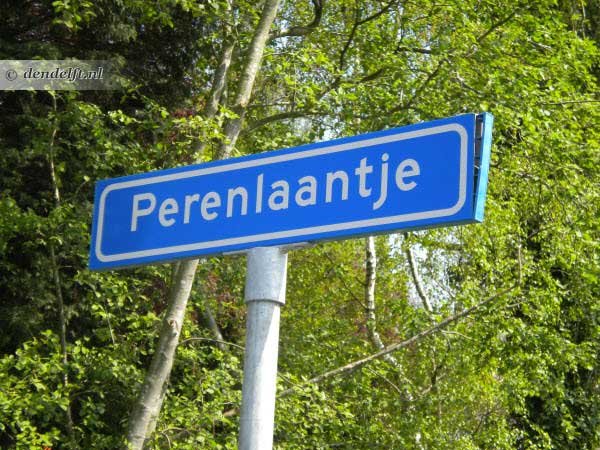
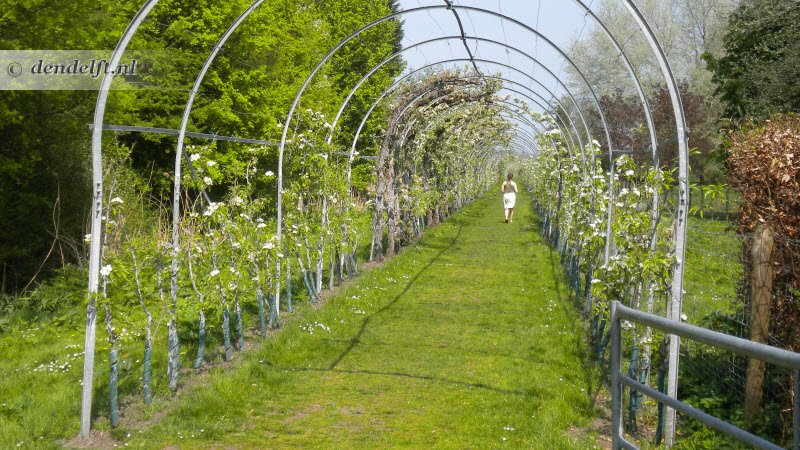
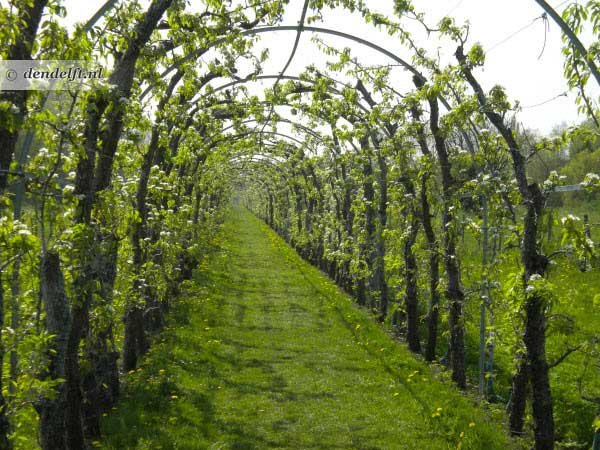
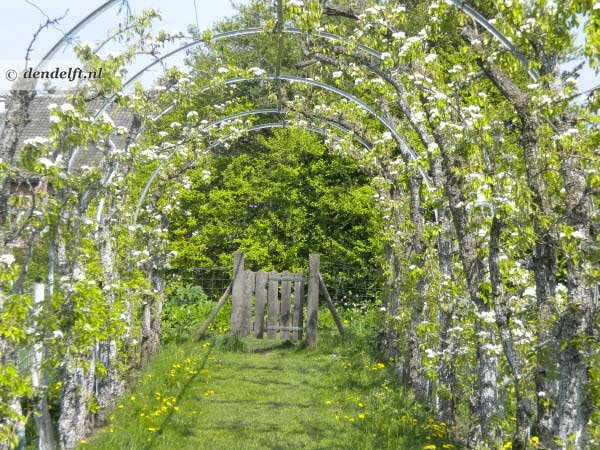
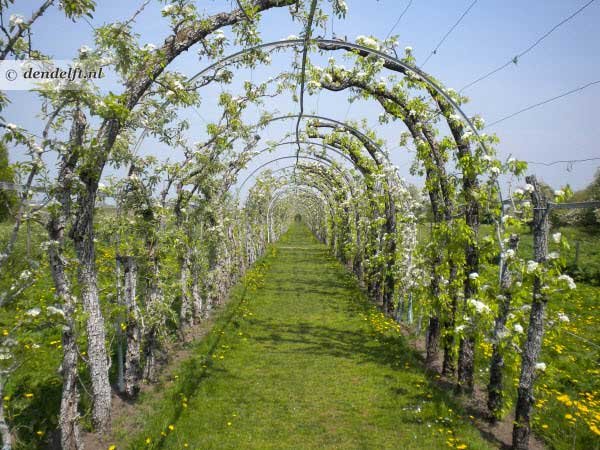
Dhe Pear Lane or in Dutch ‘Perenlaantje’, a vault of pear trees that you can walk under, has been restored to its former glory. The canopy walk, also called berceau, is the longest in Europe with two rows of trees, each 550 m long and dates from 1920. The metal arch construction of the Pear Lane has been completely restored and bad trees have been replaced by new plantings.

The Netherlands has only four berceaus with pear trees. The berceau in Hendrik Ido Ambacht is the longest of these, with 550 (!) meters and 1100 trees. If you stand at the beginning, you only see the end in the distance. Even in the whole of Europe, there is no longer berceau for fruit trees. The berceau in Hendrik Ido Ambacht is therefore truly unique.
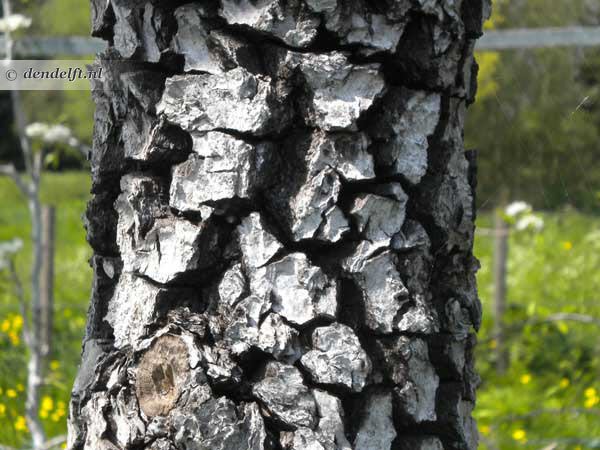
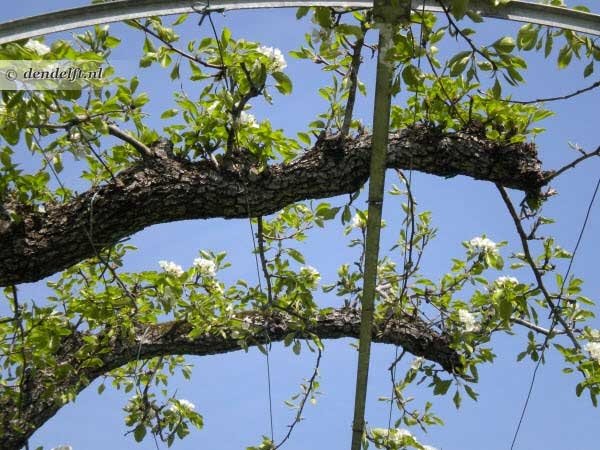
The pear tree arboretum is visible in a green nature reserve. Halfway along the canopy walkway is a natural pond. Birds are twittering there in abundance. Most of the trees in the canopy walkway have been replaced by new plantings. Most of the old fruit trees, planted in 1920, are on the northeast side of the arboretum. The trunks of these trees are 15 cm thick, and the bark has impressive grooves of 1 cm deep.

History
The pear berceau is a reminder of the heyday of fruit growing in the area. Originally, there was a railway track (narrow gauge) under the berceau. The owner at the time, fruit grower Speelman, transported his crates of harvested fruit over it with lorries.
One visitor, a somewhat older man, told me that in the past the walkway was often used by churchgoers to go to the church on Sundays. “Then they didn’t have to cycle around; using the car on Sundays was not allowed!” The church is still there, on the northeast side of the berceau.
Restoration of the construction
Pear Varieties
- ‘Bonne Louise d’Avranches‘ is a small, slender hand pear, green with a beautiful blush. The ripening period is mid-September. The cultivar produces good quality fruits, with a soft-sour taste and good aroma. One of the finest hand pears. Also suitable as a stewing pear and pastry pear. As a stewing pear, the pear naturally colours white-yellow to yellow; not red. Requires a sheltered and not too dry location. On quince rootstock, the variety is less susceptible to diseases.
- ‘Conference‘ grows on almost any type of soil. Grows naturally very healthily (little susceptible to disease) and produces good fruit every year. This hand pear is also suitable as a cooking pear, but then turns white-yellow to yellow. Flowers are partly self-pollinating. The tree does require a lot of pruning (thinning out) and fruits are somewhat susceptible to rust.
- ‘Triomphe de Vienne‘ can give a high yield, but the harvest can fluctuate annually. This cultivar is easy to grow. This hand pear is also suitable for stewing, but then remains white in color. In comparison with other varieties, very susceptible to pear fire. The fruits should not be harvested too early.
picking days organised for residents of the De Volgerlanden district.
[mks_icon icon=”fa-lightbulb-o” color=”#ff0000″ type=”fa”]A hand pear that you want to use as a stewing pear is best not harvested completely ripe. Because ripe (soft) pears easily fall apart during cooking.
Tourism
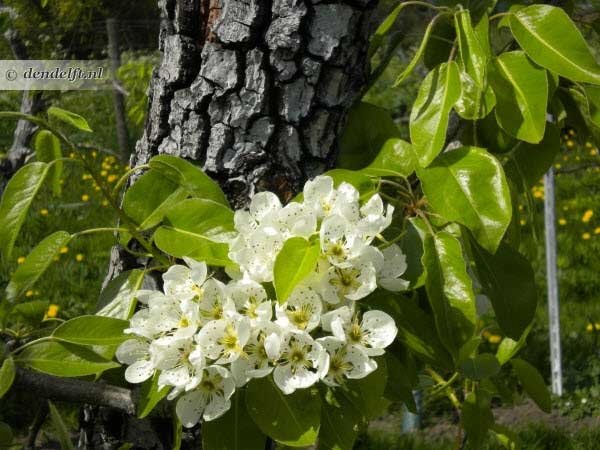
I visited the berceau during the flowering period, early May, on a weekday, mid-afternoon. I didn’t expect to meet anyone at this local attraction. But in half an hour I met 5 other visitors.
The berceau is at its most beautiful in early May (during the flowering, which lasts for several weeks) and in August (just before the pear harvest). The berceau fruit trees is freely accessible; you can walk under the berceau via a gate.
Special Occasions
The berceau with pears could well become an idyllic location for weddings: first a stroll through the berceau and then get married in the nearby church. The berceau also lends itself well to wedding reports, especially for people with ‘roots‘ in fruit growing.
Future
The municipality of Hendrik Ido Ambacht purchased the berceau as a special cultural-historical heritage, with the intention of including it as a walking route through the Vinex district De Volgerlanden. Initially, there were plans to include the Perenlaantje in a golf course. Later, the municipality decided to designate the area for housing after all. Around 3,000 more homes will be built around the canopy walkway. It is unclear whether the berceau can then be preserved.
Route and Accessibility
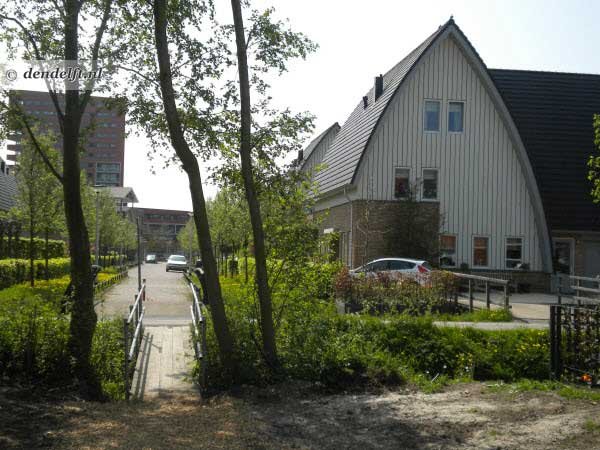
The Perenlaantje is located in the eastern part of the new housing estate De Volgerlanden in Hendrik Ido Ambacht, between the Vrouwgelenweg and the Veersedijk. Part of the Perenlaantje is built up with houses. The berceau is accessible from 2 sides: via the northeast side (Perenlaantje) and via the southwest side (Laan van Welhorst).
Perenlaantje is easy to find with car navigation or route planner. On the northeast side it is close to health center De Volgerlanden which is indicated with signs along the road. Walk through the built-up part of Perenlaantje and cross the intersection with Vrouwgelenweg straight over; via a footbridge over the ditch and a path of wood chips you will reach the berceau after 75 meters. Those coming from the southwest side can already see the berceau from Laan van Welhorst.
Opening Hours & Admission Prices
Freely accessible.
Tips:
- On a sunny day in early May, during the blossom, the berceau is at its most beautiful.
In July/August the trees are full of pears. - Het Perenlaantje is an idyllic location; very suitable for a romantic wedding report. Certainly for people with roots in fruit growing!
Pear Lane Ursulin Garden
There is a second Pear Lane!
In the Ursuline garden of Sittard (Limburg) there is a similar berceau of pear trees, several dozen meters long. The berceau was constructed around 1910 by the Sisters of the Ursuline convent and originally had 6 cultivars. Some of the fruit trees have been replaced by new plantings over the years.
Since 1993, this lane has been part of a public city garden. In 2015, the Perenlaantje received the prize of “Fruit Tree of the Year”, awarded by the Pomologisch Genootschap Limburg.
